Industrial Wearable Technology for Frontline Workers
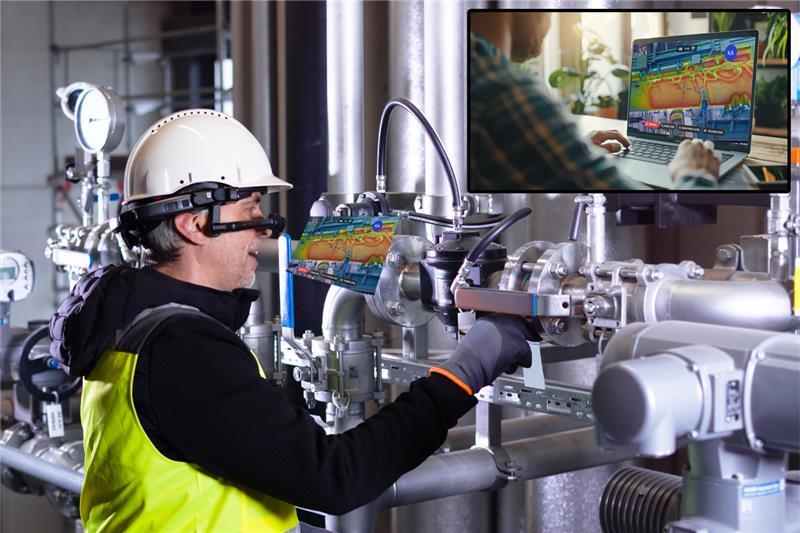
For years, digital transformation has focused on office workers, knowledge workers and corporate systems. Yet some of the most critical jobs in Australia happen far from a desk, in mines, construction sites, utility networks, manufacturing facilities and field operations. These frontline workers are responsible for keeping businesses running, but often don't have immediate access to the information, expertise or digital tools that office-based teams take for granted.
That's where wearable technology is changing the game.
Wearables are helping organisations connect workers, knowledge and technology in entirely new ways, creating safer workplaces, improving productivity and enabling faster decision-making in the field.
At imei, we're helping organisations unlock the potential of wearable technology through solutions such as RealWear, rugged hands-free devices purpose-built for industrial environments.
What Is Industrial Wearable Technology?
Unlike consumer smartwatches or fitness trackers, industrial wearables are designed for demanding frontline environments. Devices such as the RealWear Navigator 520 are rugged, voice-controlled wearable computers that provide workers with access to critical information while keeping both hands free for the task at hand. The device uses a monocular display positioned just below the user's line of sight and can be used alongside personal protective equipment (PPE).
This gives workers the ability to:
- Access procedures and work instructions
- Connect with remote experts
- Capture photos and videos
- Conduct inspections and audits
- Participate in live collaboration sessions
- Complete digital workflows
All without needing to hold a mobile phone, tablet or laptop.
Closing the Gap Between the Field and the Office
In many organisations, valuable expertise is concentrated in a small number of specialists.
When an issue occurs on-site, workers often need to:
- Wait for expert advice
- Travel specialists to site
- Stop work while decisions are made
- Delay inspections or maintenance activities
Wearable technology changes this dynamic.
With remote collaboration capabilities through platforms such as Microsoft Teams and Webex, frontline workers can share a live first-person view of a situation with subject matter experts located anywhere. Experts can see exactly what the worker sees and provide immediate guidance.
The result is faster problem resolution, reduced downtime and more efficient operations.
Improving Safety Without Sacrificing Productivity
Safety remains a top priority for industries operating in hazardous or high-risk environments. Traditional handheld devices can create distractions, limit mobility or require workers to stop what they are doing to access information.
Wearable devices are designed differently.
By using voice commands and a heads-up display, workers can keep their hands on the job while still accessing the information they need. RealWear devices are specifically designed to be rugged, voice-operated and compatible with PPE, making them suitable for harsh operational environments.
This helps organisations improve safety outcomes while supporting productivity and operational performance.
Capturing Knowledge Before It Walks Out the Door
One of the greatest challenges facing many organisations today is the loss of operational knowledge through workforce turnover and retirement. Wearable technology enables organisations to capture valuable expertise through:
- First-person video recordings
- Digital work procedures
- Remote training sessions
- Audit and inspection records
- Real-world operational walkthroughs
Instead of knowledge being held by individuals, it can be documented, shared and reused across the organisation. Knowledge capture has become one of the most valuable use cases for wearable solutions in industrial environments.
The Rise of AI-Enabled Frontline Operations
Perhaps the most exciting development in wearable technology is its potential when combined with artificial intelligence.
Imagine a worker being able to:
- Ask questions using natural language
- Search thousands of technical documents instantly
- Generate inspection reports automatically
- Receive guided troubleshooting support
- Summarise findings from an assessment
- Access AI-powered knowledge assistance in real time
As AI tools continue to evolve, wearable devices become a natural interface between frontline workers and organisational knowledge.
Rather than returning to an office to complete reports or search for information, workers can potentially access AI-assisted support directly within their operational workflows, creating faster, smarter and more connected field operations.
The future of work is not simply wearable. It's wearable and intelligent.
Common Applications Across Industry
Organisations are already using wearable technology to support:
Mining and Resources
Remote inspections, maintenance activities, safety observations and expert collaboration.
Utilities and Energy
Field service support, asset inspections and operational guidance.
Construction and Infrastructure
Digital site inspections, quality assurance and project collaboration.
Manufacturing
Training, maintenance procedures, audits and production support.
Transport and Logistics
Equipment inspections, compliance activities and workforce enablement.
Why Organisations Choose imei for Wearable Solutions
Successfully deploying wearable technology requires more than simply supplying devices.
To deliver long-term value, organisations need the right combination of:
- Device lifecycle management
- Connectivity
- Security governance
- Deployment services
- Asset management
- Repair and replacement support
- Ongoing optimisation
imei provides end-to-end support for wearable and extended reality device deployments, including provisioning, staging, asset management, nationwide distribution, repair coordination and ongoing lifecycle services.
Our approach combines Management, Security, Connectivity and Intelligence to help organisations deploy wearable technology solutions that are scalable, secure and aligned to operational outcomes.
The Future Is Hands-Free
Wearable technology is rapidly becoming a critical tool for organisations seeking to improve safety, productivity and workforce capability. By bringing together frontline workers, remote expertise, digital workflows and emerging AI capabilities, wearables are transforming the way work gets done.
The question is no longer whether wearable technology has a role to play in frontline operations. The question is how much value your organisation could unlock by putting it in the hands of the people who need it most.
Ready to explore wearable technology for your organisation?
Talk to imei about wearable solutions, including RealWear devices, deployment services and ongoing support designed for Australia's most demanding operational environments.